
Digitalization reshapes even the most tradition-bound institutions. This study by Jan Danko, Oren Golan, and Katja Rost explores how religious institutions legitimate the use of digital media. It examines Benedictine monasteries – reclusive communities of religious virtuosi deliberatively balancing tradition and technology. Based on ethnographic fieldwork and 28 interviews in European monasteries as well as in Jerusalem, their study identifies three grounded narratives through which monks legitimate digital media use amid ambivalence: (1) updated traditionalism, narratively aligning digital tools with monastic rule and mission; (2) maturation and self-responsibility, linking digital use to disciplined renunciation; and (3) advocating religious values of the self, employing digital media to sustain supportive relationships and their personal pious journey.
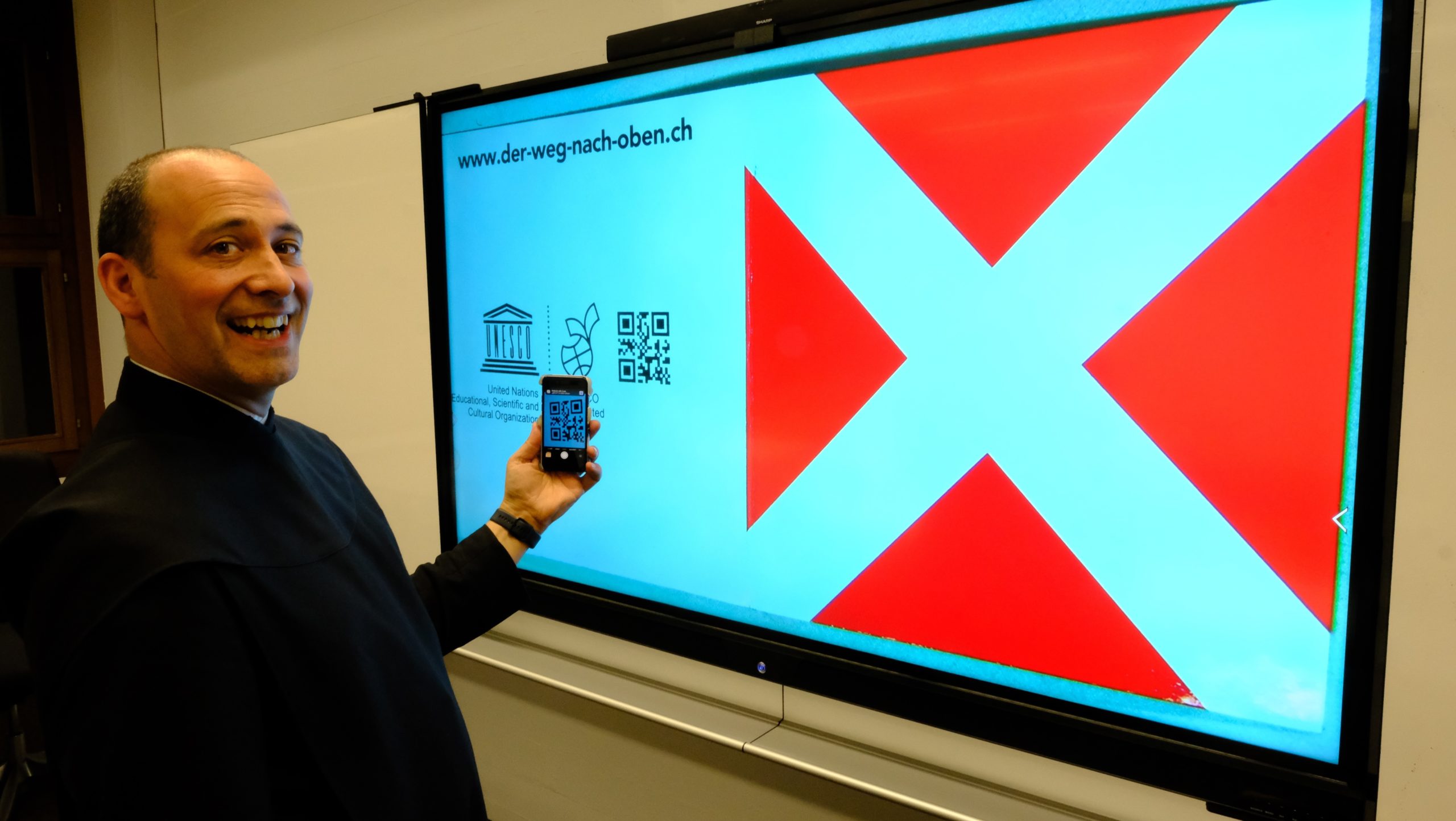
Picture: A monk standing in front of a digital whiteboard, scanning the QR code with its smartphone. The smartwatch on his wrist further underscores the integration of digital tools into monastic daily life. Source: first author’s fieldwork.
Building on a multilevel theory of legitimacy (Bitektine and Haack, 2015), the study shows that digital media use is omnipresent and highly individualized within the monastery, where anomie emerges in the absence of binding top-down regulation. While digital practices seem communally accepted, individual monastics withhold their ambivalent stance toward digitalization. Digital media are hence legitimized in a bottom-up process, through a cyclical interaction between communal validity beliefs and individual propriety judgments. This dynamic illustrates how traditional religious organizations reconfigure authority and legitimacy in the digital era.
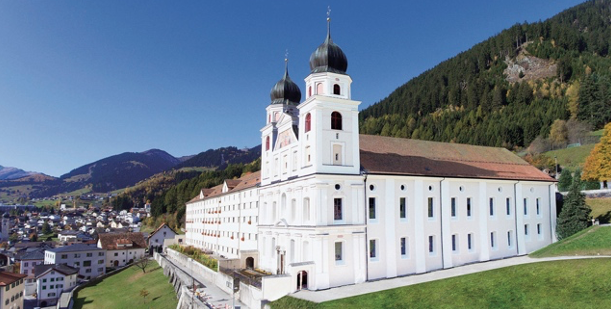
Picture: The Benedictine Monastery of Disentis has recently celebrated 1400 years of continuous existence, amid ongoing technological adaptation. Source: www.kloster-disentis.ch/