
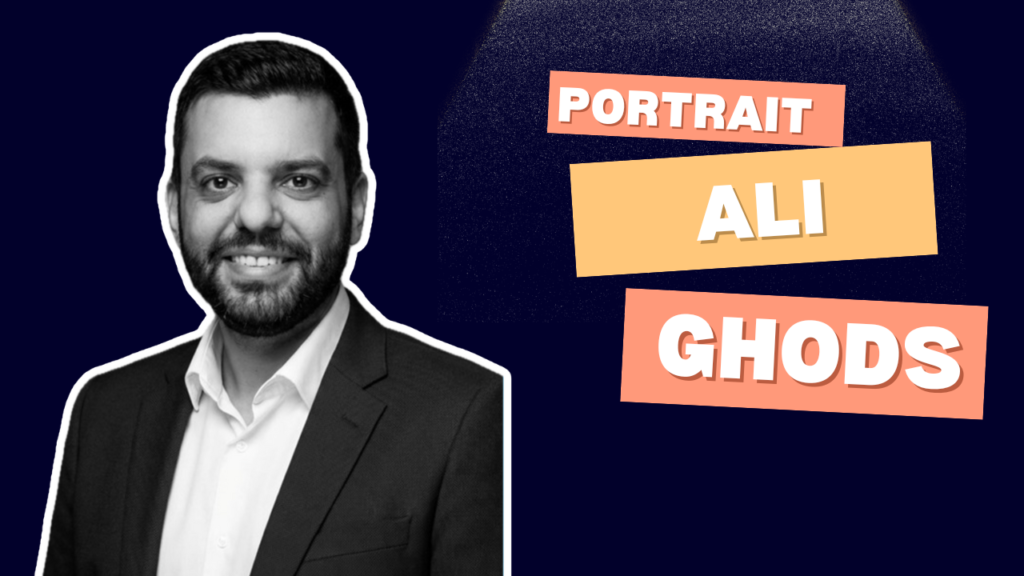
Ali’s Path into Legitimacy Research
Ali Ghods is an Assistant Professor of Entrepreneurship at the IAE Aix-Marseille Graduate School of Management, specializing in how entrepreneurs experience and navigate legitimacy. His journey into legitimacy research began during his doctoral dissertation on the factors facilitating the internationalization of innovative startups. As he reviewed the literature, legitimacy repeatedly emerged as a key mechanism helping young ventures overcome the liabilities of newness and foreignness when entering international markets—yet its underlying processes remained largely unexplored. This gap sparked his curiosity: he wanted to understand not only why legitimacy matters for startups, but how it operates and travels across borders. This unresolved puzzle continues to drive his research today.
Influential Works
Several works have influenced Ali’s thinking around legitimacy. A first inspirational work was the Multilevel Model of the Legitimacy Process developed by Bitektine and Haack (2015). This model helped him to see legitimacy not only as an institutional phenomenon but also as an element formed through the evaluations of individual actors. Moreover, it showed him how legitimacy is not something static but rather emerges through dynamic processes at multiple levels.
A second key influence was the Process Model of Internal and External Legitimacy by Drori and Honig (2013). This work was fascinating for Ali because, until then, he had viewed legitimacy primarily through the eyes of external stakeholders – investors, customers, regulators. Drori and Honig showed him that what happens inside organizations also matters: how founders and employees make sense of legitimacy is itself a crucial dimension.
A third influential work was Cristina Bicchieri’s (2016) Norms in the Wild: How to Diagnose, Measure, and Change Social Norms. Her philosophical and sociological framework offered Ali a precise account of how social norms operate – what individuals believe is appropriate, what they expect others to consider appropriate, and how shared expectations shape behavior. This work sharpened his understanding of the microfoundations of legitimacy, particularly the roles of expectations, norms, and values in shaping legitimacy judgments.
Challenges in Studying Legitimacy
For Ali, a central challenge in legitimacy research lies in measuring expectations. Although expectations are foundational to legitimacy, they are notoriously difficult to observe and measure because they are often invisible, fluid, and deeply embedded in social contexts. Individuals may not be fully aware of these expectations until they are violated.
This challenge is further compounded by the multilevel nature of legitimacy. Little is known about how individual judgments aggregate into collective perceptions, or how micro-level interactions and pressures translates into macro-level outcomes. While existing methods – surveys, qualitative studies, longitudinal designs – each capture pieces of the puzzle, no single approach fully grasps the complexity of expectations across levels.
Overall, Ali considers that the key difficulty is to bridge the gap between the theoretical complexity of legitimacy research and the methodological tools currently available. The field has developed rich and nuanced theories, but methodological approaches have yet to fully catch up.
Expertise and Main Contribution to Legitimacy Research
Ali’s expertise lies at the intersection of legitimacy and entrepreneurship, with a particular focus on how entrepreneurs experience and make sense of legitimacy in their everyday work. He approaches legitimacy not as an abstract construct but as a lived reality: something that becomes salient when entrepreneurs interact with investors, customers, or potential partners. Yet, he observes a persistent gap between how scholars conceptualize legitimacy and how entrepreneurs experience it in practice. While academic research offers sophisticated models and typologies, entrepreneurs often lack the language and tools to diagnose legitimacy problems and respond to them strategically. Ali’s central contribution is therefore to bridge this theory–practice divide by translating complex legitimacy concepts into more accessible and actionable frameworks. In doing so, he aims to help entrepreneurs reconnect with their audiences and better align with evolving stakeholder expectations.
Areas for Future Research
For Ali, the most promising research direction lies in understanding how entrepreneurs navigate legitimacy in increasingly polarized environments – politically, economically, and socially. Today’s audiences often hold conflicting – and sometimes irreconcilable – expectations across issues such as sustainability, diversity, immigration, or social justice. These are not merely differences in preference, but fundamentally opposing views about what is appropriate, desirable, or morally acceptable.
Such conditions create profound dilemmas for entrepreneurs. Much of the existing legitimacy literature assumes that organizations can identify audience expectations and align their strategies accordingly. But this assumption breaks down when signaling legitimacy to one group actively delegitimizes a venture in the eyes of another. On that basis, Ali calls for new theoretical and methodological tools capable of capturing legitimacy dynamics under conditions of audience fragmentation and normative conflict.
He argues that future research should address questions such as how entrepreneurs prioritize between incompatible expectations, how they make sense of polarized environments, and how they respond to conflicting demands from their diverse audiences. Understanding these processes, he believes, is essential for advancing legitimacy theory in an increasingly divided world.
Discover more about Ali’s research here.