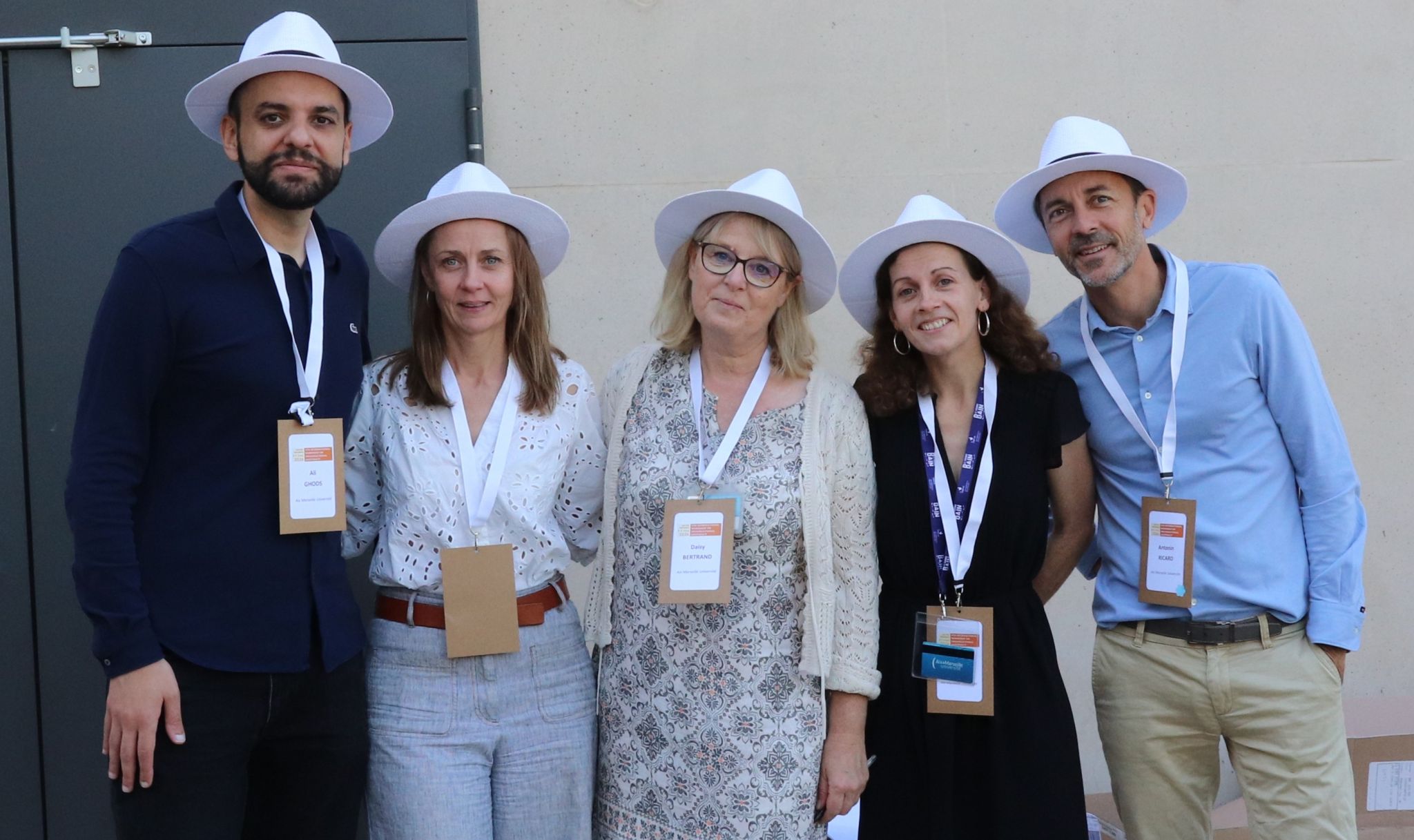
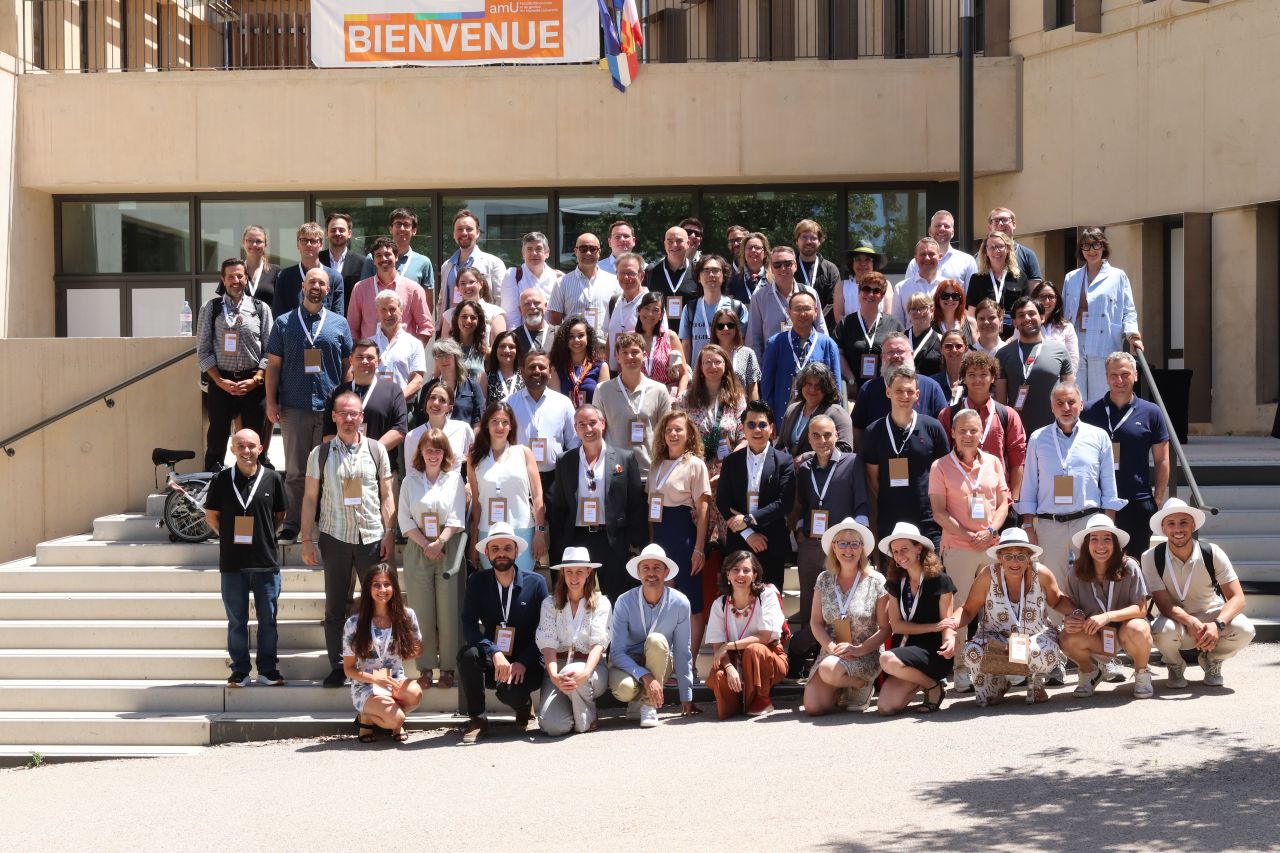
The 4th International Workshop on Organizational Legitimacy took place on June 8–9, 2026 in Aix-en-Provence, France. Organized by a dedicated team from the CERGAM (Center d’Etudes et de Recherche en Gestion d’Aix-Marseille) and CLE (Chaire Légitimité Entrepreneuriale), it brought together researchers at the forefront of legitimacy research for two days of presentations, debates, and collective inquiry.
Congrats to all the organizing team for such a great moment!
Some key figures:
- 71 short abstract submissions
- 74 participants, including an amazing organizing team
- 54 universities represented.
Coming from universities across the world, participants ranged from PhD students to senior editors. The program combined keynotes, panel discussions with journal editors, roundtable sessions moderated by experts (every participant presented an ongoing project and received feedback on it), and a dedicated space for junior scholars.
About the keynotes
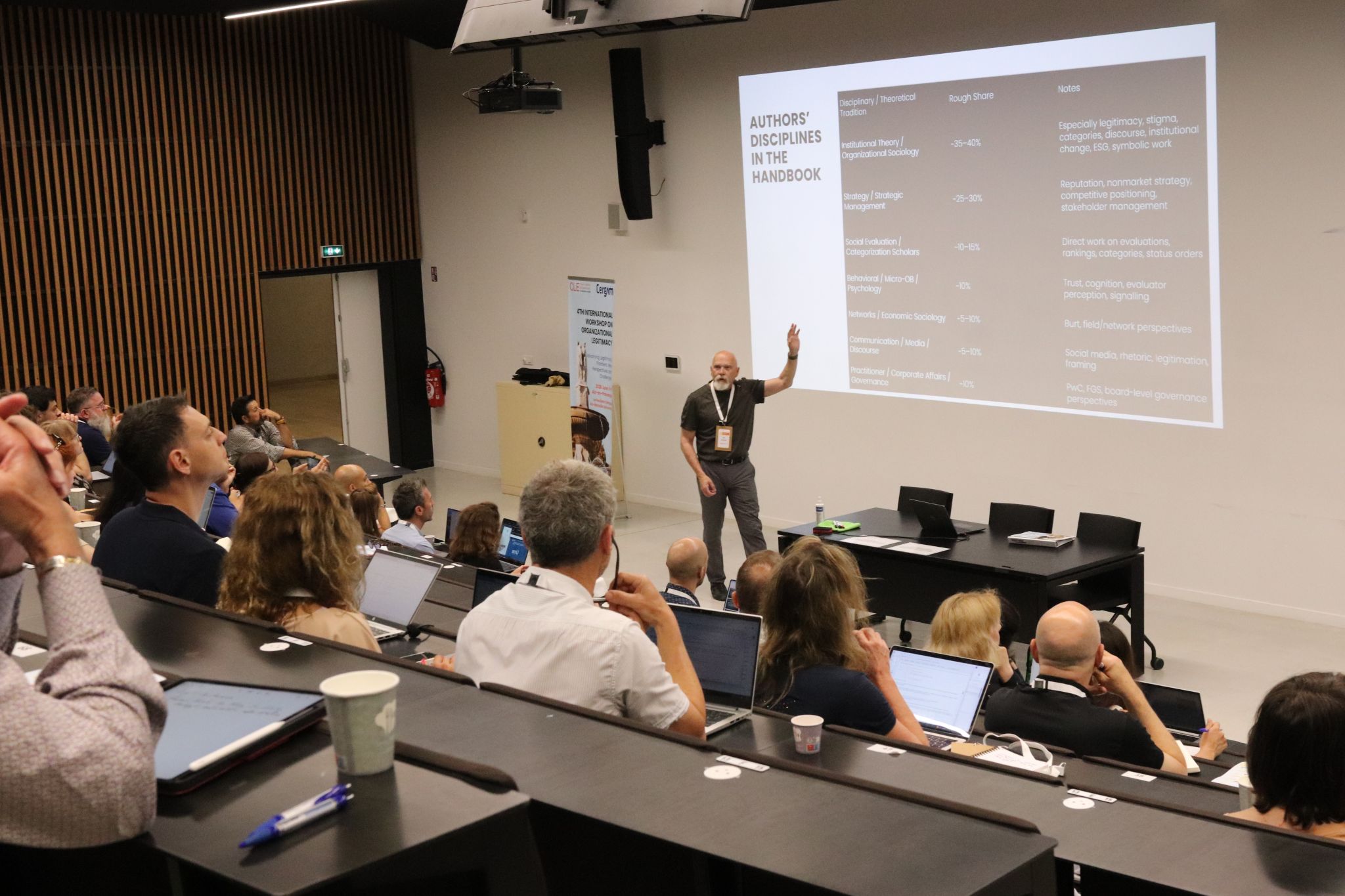
The workshop was structured around four main keynotes, each anchored by an expert presentation and opened up through extended Q&A and collective discussion.
Roy Suddaby offered a provocative reading of the field’s new landmark reference, diagnosing an overreliance on institutional theory, the isolation of constructs from one another, and a systematic blind spot regarding values and their economic instrumentalization.
Gerardo Patriotta presented a new paper on “omnicrisis”, a new theory of systemic, boundary-spanning crises, and argued that occupational groups, not organizations, are the focal actors when jurisdictional order breaks down.
Eric Schoon explained that empirical legitimacy research has systematically treated social expectations as a static background and offered four mechanisms (innovation, spillover, diffusion, population replacement) to study them as drivers of change.
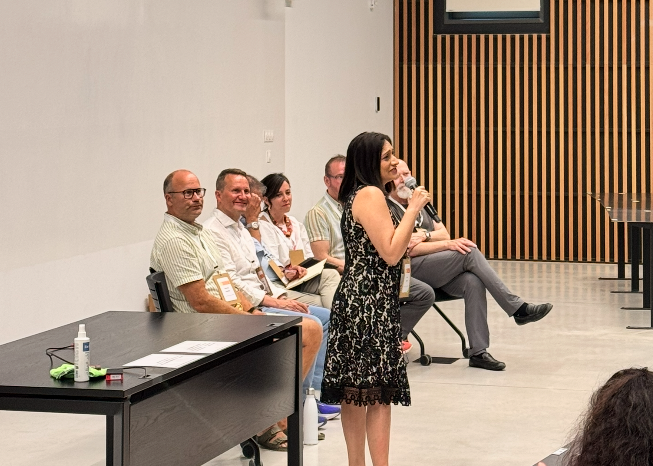
We finished with a panel discussion on publishing legitimacy research. Editors from AMR, Organization Studies, JMS, Business and Society, and AOM Collections discussed what constitutes a theoretical contribution, how to navigate the FT50 controversy, and what diversity in publishing looks like in practice. Several themes ran through the conversation: understand which journals count at your institution before you submit; develop your own voice rather than assembling one from reviewers’ expectations; and expect that a genuinely good paper takes three to five years, sometimes longer… So choose a question you actually care about!
Here are 4 takeaways from the International Legitimacy Workshop
1. Studying constructs in isolation is no longer enough
The field has built rich theories of legitimacy, reputation, status, and authenticity, but these constructs do not operate independently in the real world. The next theoretical frontier lies in their interactions, configurations, and mutual transmutations.
2. The economic dimension of social evaluation has been systematically undertheorized
Social evaluation research inherited a predominantly symbolic conception of value from institutional theory. Reintegrating the material and economic dimensions (and the conversion processes between them) will enhance the field’s relevance.
3. The organization is not always the right unit of analysis
Some of the most consequential dynamics in legitimacy and social evaluation unfold at the level of occupational groups, institutional fields, or jurisdictional orders. Broadening the focal actor would give many research opportunities.
4. The field needs new measurement tools
Theoretical development has outpaced empirical infrastructure. Building validated constructs, novel instruments, and methodological capacity will allow cumulative knowledge to accumulate.
And if these questions resonate with your own research agenda, mark your calendar: the 5th International Workshop on Organizational Legitimacy will be held at IE Business School in Madrid next year.
See you there!