Call for Papers: 4th International Workshop on Organizational Legitimacy
Advancing Legitimacy Frontiers: New Perspectives and Challenges
8-9 June, 2026, Pauliane Campus, Aix Marseille University, Aix en Provence
Background
The 4th Annual Organizational Legitimacy Workshop builds on the legacy of previous editions: the inaugural event at the University of Lausanne in 2023, the second workshop at Vrije Universiteit Amsterdam in 2024, and the third edition at EM Lyon in 2025.
Purpose and Theme
Building on previous workshops’ achievements in covering legitimacy as a multilevel construct (Bitektine & Haack, 2015; Haack, Schilke, & Zucker, 2020) and fostering cross-disciplinary dialogue (e.g., van den Broek et al., 2023; Alvarez et al., 2023), this edition explores emerging frontiers in legitimacy research. As organizations navigate unprecedented complexity, from AI and algorithmic transformation (Martin & Waldman, 2022) to climate transitions, political fragmentation, poverty and migration (Bakker & McMullen, 2023), organizational legitimacy faces new perspectives and challenges (Patriotta, Augustine, & Voronov, 2025). This edition encourages bold theoretical extensions, innovative methodological approaches, and empirical studies that capture legitimacy processes in these novel organizational realities.
The workshop provides a collaborative platform for developmental feedback and intellectual exchange among scholars at all career stages, with particular encouragement for early-career researchers. We welcome submissions that advance legitimacy theory through fresh conceptual lenses, rigorous empirical inquiry, or methodological innovation.
Topics of interest include the theoretical and empirical advances in legitimacy research hereafter (but are not limited to):
- Cross-border and transnational legitimation processes
- Temporal dimensions of legitimacy judgment formation
- Legitimacy in digital and AI-driven contexts
- Legitimacy and organizational responses to grand challenges
- Novel measurement and operationalization approaches
- Legitimacy at the intersection of multiple institutional logics
- Legitimacy and Creativity & Innovation
- Legitimacy in the context of inclusive entrepreneurship, minority entrepreneurship, and migrant entrepreneurship
- States of legitimacy on the legitimacy-illegitimacy continuum
Through presentations, roundtable discussions, and facilitated dialogue with international experts, participants will collectively shape the next generation of legitimacy scholarship in management and organization theory.
The reference list is available at the bottom of this page.
What are the Key Dates?
1
15 February 2026
Submission deadline of an extended abstract (1,000 words)
2
15 March 2026
Notification of acceptance
3
29 April 2026
Submission of a final paper with research in progress (2,000-8,000 words)
4
8-9 June 2026
Organizational Legitimacy Workshop at Aix Marseille University
The deadline to submit an extended abstract is 15 February 2026.
Email your submission to:
legitimacyaix@gmail.com
About Aix-Marseille Université
Aix-Marseille Université (AMU) is the largest multidisciplinary university in the French-speaking world, with 80,000 students and nearly 8,000 staff across 5 major campuses that meet international standards. The Pauliane campus is situated in the city of Aix-en-Provence and houses the Faculty of Economics and Management and the research laboratory of CERGAM.
Aix-en-Provence is a charming university city in southern France, about 30 kilometres north of Marseille. It’s known for its elegant 17th and 18th-century architecture and hundreds of fountains, which have earned it the nickname “City of a Thousand Fountains.” The city has a rich artistic heritage as the birthplace of painter Paul Cézanne, a vibrant café culture, and colourful daily markets. With its warm Mediterranean climate and mix of historic charm and student energy, it’s one of the most popular destinations in Provence.



Institutional Partners of the 4th International Organizational Legitimacy Workshop
Workshop registration fee
-
PhD students: €80
-
Faculty (early bird registration by 15/05/2026): €150
-
Faculty (regular): €200
Organizing Committee

Bénédicte Aldebert
Bénédicte Aldebert is a Full Professor in entrepreneurship at Aix-Marseille University, within the Faculty of Economics and Management, and a member of the CERGAM research laboratory. She is also the co-founder of the Entrepreneurial Legitimacy Chair (CLE), which brings together researchers, entrepreneurs, and ecosystem stakeholders to advance knowledge on entrepreneurial legitimacy and innovation. Her research examines the measurement of legitimacy, legitimacy-building processes, and the dynamics of deep-tech entrepreneurial ecosystems. She serves as the principal investigator of the ANR-funded international project ECO-CARE, which investigates how deep-tech policy instruments shape the entrepreneurial trajectories of early-career researchers. She also leads an interdisciplinary research collaboration on student entrepreneurship and innovation in higher education, providing comparative insights from the EURO-Africa CIVIS Alliance.

Daisy Bertrand
Daisy Bertrand is a Research Engineer at the Centre d’étude et de recherche en gestion d’Aix-Marseille (CERGAM) and a member of the Entrepreneurial Legitimacy Chair (CLE). She holds a PhD in Cognitive Psychology and has since specialized in research methodology and data modeling. In addition to her work on entrepreneurship in collaboration with members of the Chair, her research also focuses on service marketing and the sharing economy. She is the Director of the Entrepreneurship Observatory affiliated with the Chair and heads the Entrepreneurship, Innovation, and Internationalization (E2I) research group.
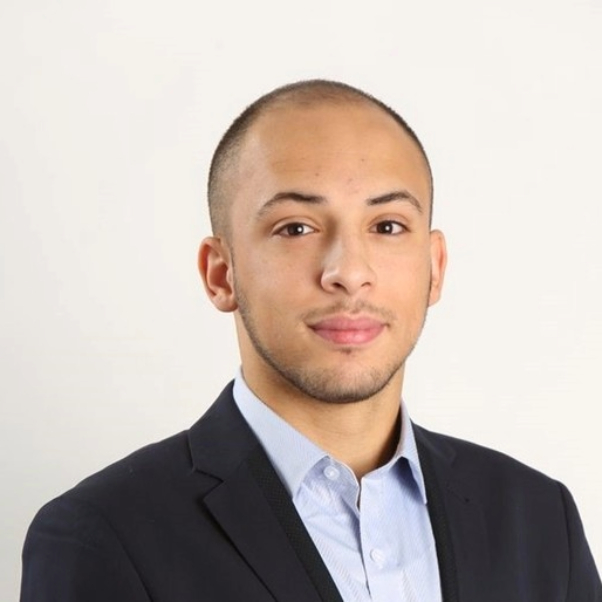
Ramzi Benamara
Ramzi Benamara is a 4th-year PhD candidate at the Aix-Marseille School of Economics and Management, affiliated with the CERGAM Research Center. His research focuses on the legitimacy of innovative companies, with a particular emphasis on deep tech ventures.
In addition to his doctoral studies, he serves as a Temporary Teaching and Research Fellow (ATER) at the same university. He is also involved in a project dedicated to the study of intentional entrepreneurship among students.
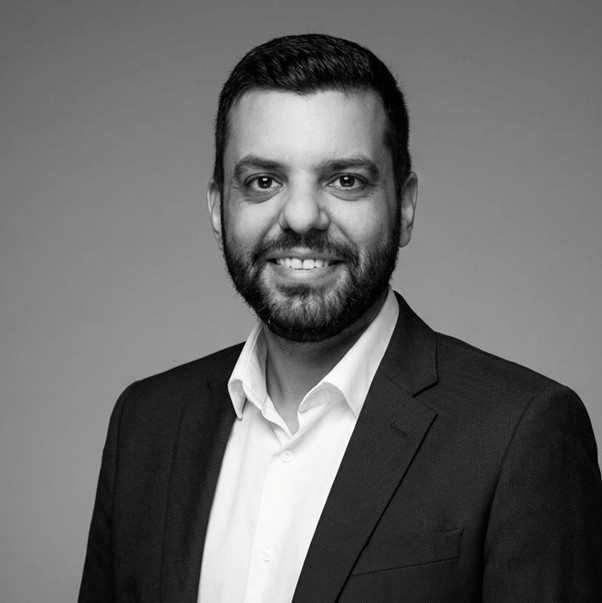
Ali Ghods
Ali Ghods is an Associate Professor of Entrepreneurship at IAE Aix-Marseille University and a member of the CERGAM research laboratory and the Entrepreneurial Legitimacy Chair (CLE). In 2025, he created the MSc2 program in Entrepreneurship and Innovation, in which he links academic research with teaching while bringing together entrepreneurial actors from the local ecosystem. His research focuses on entrepreneurship and legitimacy. He is particularly interested in how entrepreneurs leverage their cognitive abilities to build both their personal legitimacy and that of their ventures, as well as in methodological approaches to measuring legitimacy using textual analysis and large textual datasets. His work has been published in journals such as Entrepreneurship and Regional Development.

Amandine Maus
Amandine Maus is an associate professor at the Faculty of Economics and Management at Aix-Marseille University, where she is Head of the Bachelor’s program in Management. She is also a member of the CERGAM research laboratory and the operational director of the Entrepreneurial Legitimacy Chair at Aix-Marseille University. Her research, which received the 2020 Best Dissertation Award in Entrepreneurship from the Academy of Entrepreneurship and Innovation, broadly focuses on entrepreneurial support organizations, their business models, dynamic capabilities, and legitimacy. In 2025, she was awarded a French National Research Agency JCJC grant for the international project “FOster Success and Performance of Inclusive Entrepreneurship,” through which she investigates the drivers of performance and legitimacy in inclusive entrepreneurship.

Antonin Ricard
Antonin Ricard holds a PhD in Business Administration (IAE Aix-Marseille, 2012), awarded the Best International Management Thesis Prize (ATLAS/AFMI-FNEGE). He also earned a General Engineering degree (ESME Sudria, 2002) and an MSc in Telecommunications (University of Leeds, 2002 – with distinction).
With a diverse background as a project manager for companies like Westinghouse, France Telecom, and SCC, he joined IAE Aix-Marseille in 2014. There, he co-founded the icube lab in 2017, a pioneering initiative to teach future skills through entrepreneurship, and launched the Chair of Legitimacy and Entrepreneurship in 2019. In May 2021, he was elected Dean of IAE Aix-Marseille, where he champions a strategic vision focused on pedagogical innovation and social responsibility.
His research explores entrepreneurship through two key lenses: legitimacy (measure, development, and impact) and internationalization (decision-making, effectuation, networks, and psychological distance). He regularly publishes in leading academic journals, including the Journal of International Entrepreneurship, Journal of International Management, Journal of Vocational Behavior, M@n@gement, Management International, and Small Business Economics.
Passionate about education and societal impact, Antonin is committed to shaping the next generation of entrepreneurs and bridging the gap between academic research and managerial practice.
Experts
Alex Bitektine
Concordia University, Canada
Björn Claes
The Open University, United Kingdom
Patrick Haack
University of Lausanne, Switzerland
Laura Illia
University of Fribourg, Switzerland
Anna Jasinenko
University of St Gallen, Switzerland
Gerardo Patriotta
Bath School of Management, Bath, United Kingdom
Eric Schoon
The Ohio State University, USA
Sonia S. Siraz
emlyon business school, Lyon, France
Roy Suddaby
University of Victoria, USA
Eero Vaara
University of Oxford, United Kingdom
References
Bitektine, A., & Haack, P. (2015). The “macro” and the “micro” of legitimacy: Toward a multilevel theory of the legitimacy process. Academy of Management Review, 40(1), 49–75.
Bakker, R. M., & McMullen, J. S. (2023). Inclusive entrepreneurship: A call for a shared theoretical conversation about unconventional entrepreneurs. Journal of Business Venturing, 38(1). https://doi.org/10.1016/j.jbusvent.2022.106268
Haack, P., Schilke, O., & Zucker, L. (2020). Legitimacy Revisited: Disentangling Propriety, Validity, and Consensus. Journal of Management Studies.
Alvarez, S., Newman, A. B., Barney, J., & Plomaritis, A. (2023). Creating Stakeholder Legitimacy in the Eyes of Stakeholders: The Case of Havana’s Paladares. Entrepreneurship: Theory and Practice, 47(1), 17–65.
van den Broek, T., Langley, D. J., Ehrenhard, M. L., & Groen, A. (2023). When Do Evaluators Publicly Express Their Legitimacy Judgments? An Inquiry into the Role of Peer Endorsement and Evaluative Mode. Organization Science, 34(6), 2143–2162.
Martin, K., & Waldman, A. (2023). Are Algorithmic Decisions Legitimate? The Effect of Process and Outcomes on Perceptions of Legitimacy of AI Decisions. Journal of Business Ethics, 183(3), 653–670.
Patriotta, G., Augustine, G., & Voronov, M. (2025). Legitimacy Tests: Theorizing legitimacy as justification work. Organization Theory, 6(4).